
If you've typed some version of this into Google at 11pm with a baby on you, I want to save you some time: most of what comes up is vague. "Nursing friendly" gets stamped on things that would take a full costume change and a friend on lookout duty to actually use in public. So here is the honest version, from someone who has designed both the useless kind and, eventually, the kind that works.
The four ways a dress lets you feed, and what's wrong with each…
Wrap fronts. Look breastfeeding friendly, and technically are, but they gape. Every time you bend down, reach for something, or have a toddler climb you, there's a chance of more on display than you planned. Fine at home, a small anxiety everywhere else.
Clip-down panels. Efficient once you know the trick, baffling the first three times, and they add a visible seam and hardware to the front of the dress whether you're feeding or not. You can usually tell, just by looking, that a dress has one.
Button fronts. The most common answer to "how do I make this nursing friendly," and the least useful in practice. Undoing several buttons one-handed while holding a baby, in a cold pub garden, is not a small ask. They also don't stay done up neatly through a whole day of a squirming toddler pulling at them.
Zips, positioned properly and hidden in the seam or print. This is what I make. A single motion, one hand, and closed again in about two seconds. Because the zip sits inside a seam or is disguised by the print, nobody can see it's there at all, including you, most of the time.

The poppy dress
This dress has the zips hidden under the beautiful pin-tuck detail you can’t see when worn.
The question I get asked the most: can people actually tell?
No. That's the entire point, and it's also the thing people don't quite believe until they've felt one open and close for themselves. One customer, who wasn't pregnant or breastfeeding at all, told me she just liked wearing the dresses because they were nice dresses that happened to have a clever detail she'd never have spotted on her own. That's the test I design against: would this work as a dress first, with the access as a quiet second feature, rather than the other way round.
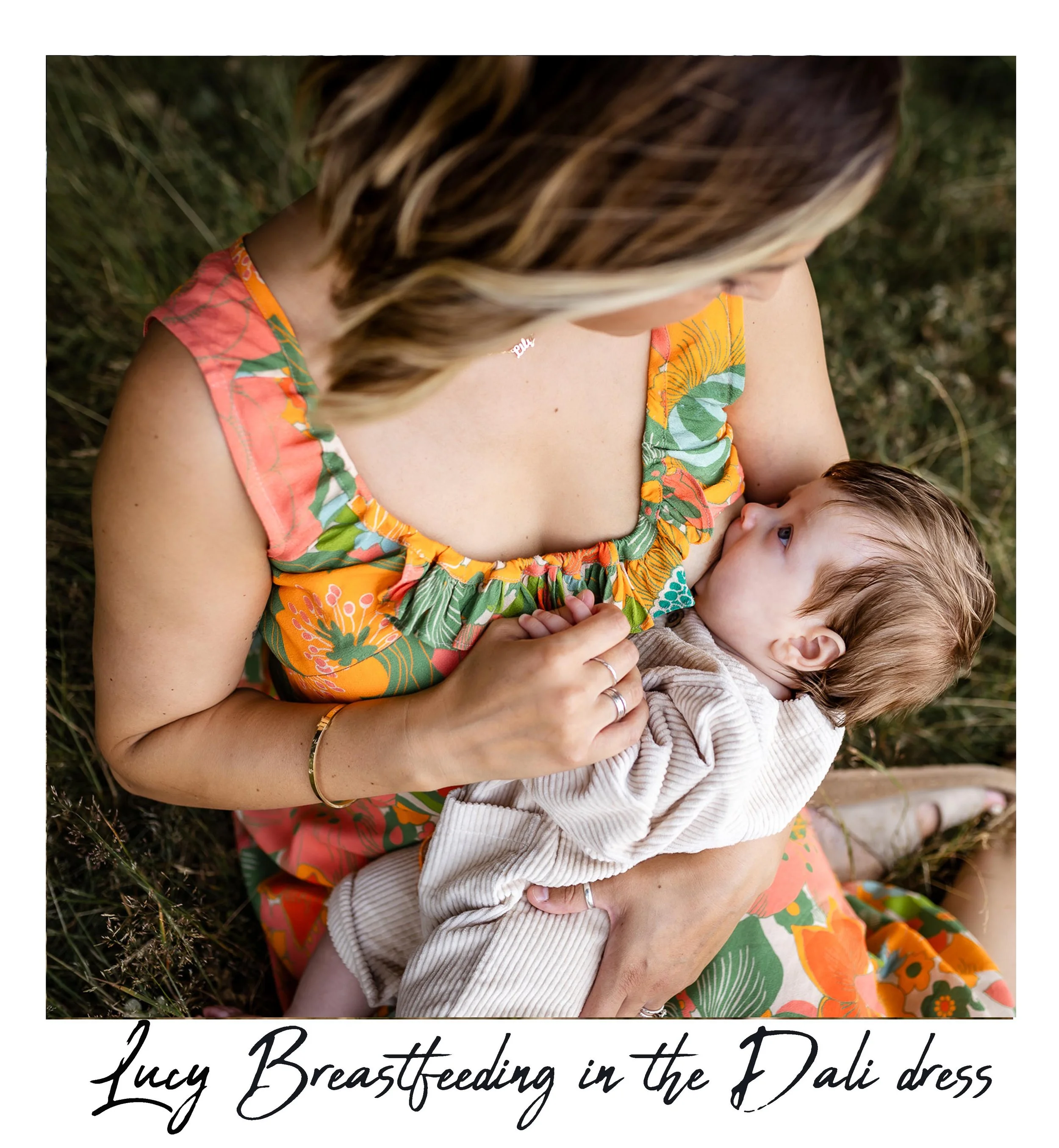
The Dali dress
The part everyone forgets: what happens after you stop feeding
Most "breastfeeding friendly" clothing is designed to solve one specific problem for one specific window of your life, and then it sits in the back of the wardrobe once that window closes. A wrap front doesn't stop being a wrap front. A dress built entirely around a clip panel doesn't stop looking like it was built around a clip panel.
A hidden zip doesn't announce itself either way. Once you're not feeding anymore, the dress simply carries on being a dress, worn for exactly the same reasons you'd have bought it in the first place: because you liked it. That's not an accident. If a piece of clothing is only going to earn its keep for a few months, it needs to be doing something else worthwhile for the years either side of that, or it isn't really solving the problem, just deferring it.
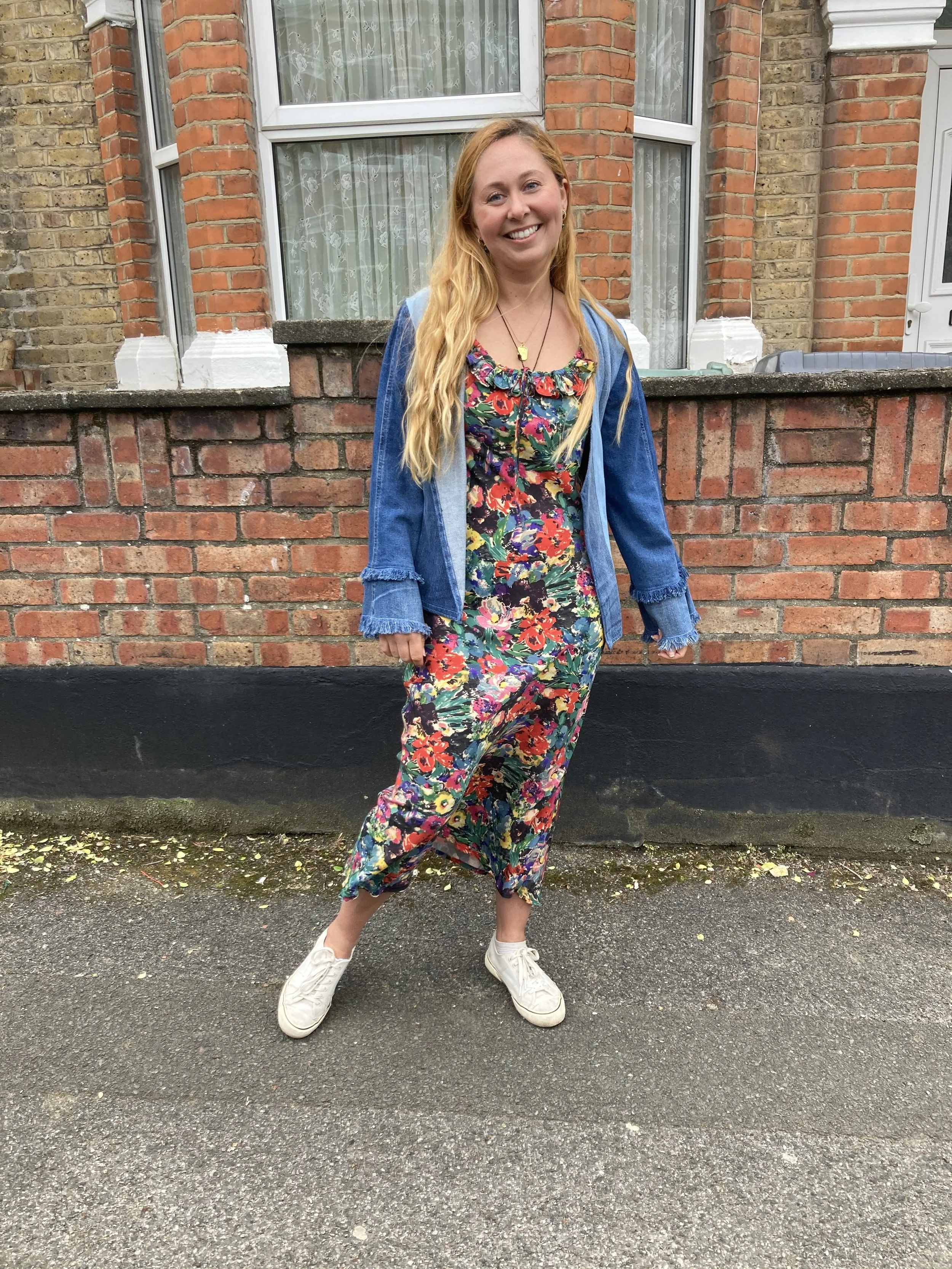
Why I make it this way
I design and make everything myself, in the UK, in runs of 25. That's partly a sustainability decision and partly a practical one: small runs mean I can put real time into details like zip placement that a larger factory run wouldn't allow for. It also means when a run sells out, it's actually gone, not reordered from a factory on the other side of the world.
If you're currently doing the 11pm search, trying to work out whether something will actually work rather than just claim to, that's the whole design brief behind every dress here: works for feeding, works after, and nobody else needs to know which part of your life it's currently doing.
You can see the full collection here — every dress made in the UK, in a limited run of 25, with feeding access nobody can spot.